
Substack
Made of This Earth
What would change if Earth were sacred to us again?
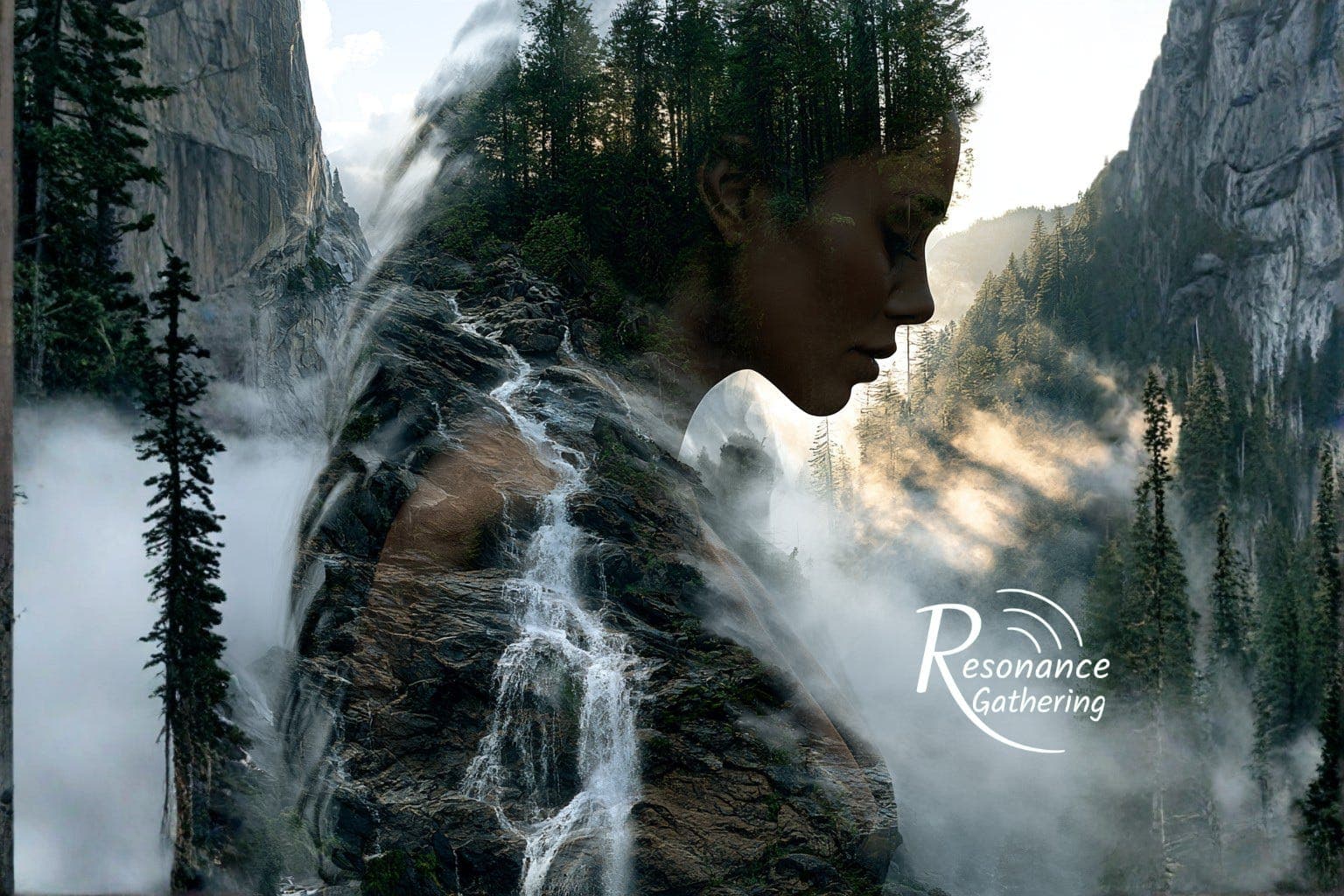
Somewhere along the way, nature became a destination.
We drive to it and we book weekends around it. We search for cabins surrounded by trees and save photographs of places where mountains fall into lakes. We tell ourselves we need to get outside more. We call it getting away, as though the rest of life were happening somewhere else, made of different material, in a different world.
But right now, wherever you are reading this, there is Earth beneath you.
There may be hardwood beneath your feet, then concrete, plumbing, gravel, foundations. Keep going deeper and our beautiful planet is there. Continuous beneath all of it.
It was beneath the hospital where you were born. Beneath every school, office, airport, grocery store and kitchen you have ever stood inside. Beneath every road you have driven on and every path you have walked. It has held every step of your life.
We have never actually gone indoors from Earth.
The walls around us are made from her materials. The glass began as minerals. The metal was pulled from rock. The wood once stood beneath a star filled sky. Even the building we imagine separating us from nature was made from nature.
We have simply built enough layers between ourselves and the ground that we can forget where we are. Perhaps that explains one of the stranger feelings of modern life: we can become homesick for a world we never left.
The planet moving through you
Take a breath.
For a few seconds we call the air inside your lungs your breath. A moment earlier it belonged to no one. Plants, algae and photosynthetic microorganisms are part of the enormous living system continually replenishing the oxygen cycling through Earth’s atmosphere. Long before this breath entered your body, life was involved in making it possible.
Then there is the water.
The water behind your eyes, in your blood, and surrounding every cell. Before it became part of you, it moved through a world of ocean and cloud, rain and river, soil and root. It has passed through other living beings. After you, it will continue moving.
Carbon moves between atmosphere, plants, animals, oceans and soil. Minerals weather from rock and enter living systems. The calcium holding your bones together participates in geological and biological cycles that began unimaginably long before your particular body appeared.
Your body is assembled from this place. Earth, for a little while, arranged as lungs and hands and skin and eyes.
We draw a line around the body and call what is inside it self and what is outside it world. Yet that line is crossed constantly. We breathe the world in. We drink it. We eat it. We release ourselves back into it. The exchange never stops. Maybe this is why some places reach us before thought has time to catch up.
You enter an old forest and instinctively lower your voice.
Your bare feet hit wet sand and your whole body seems to exhale.
You stand beside an ocean and watch something so large that you forget your to-do list.
You look up on a clear night and realize that some of the light reaching your eyes began its journey before you were born.
A mountain asks nothing of you. A redwood offers no explanation. The ocean does not need to tell you that you belong. For a moment, you simply remember scale, and sometimes that is enough to create awe.
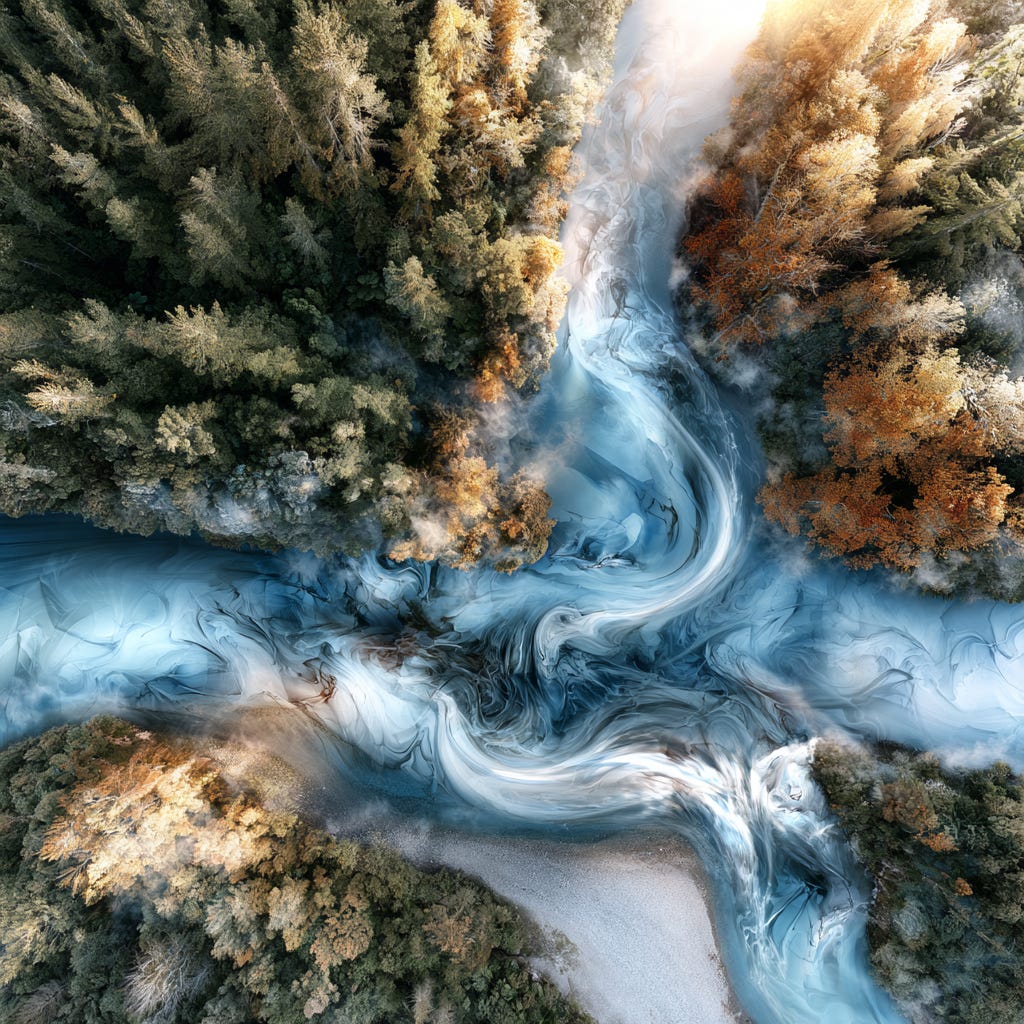
I am the River and the River is me
There is a river in Aotearoa, New Zealand that the law recognizes as a person. I find this incredibly fascinating even though it sounds almost impossible.
Rivers are things on maps. We give them names, measure their flow, build beside them, dam them, divert them, cross them. We talk about water rights and property boundaries and how much can be extracted.
For generations, that was part of the conflict surrounding the Whanganui River. But the Whanganui iwi and hapū were coming to that conflict with a radically different understanding of what the river was.
Their relationship is expressed in a few words:
Ko au te Awa, ko te Awa ko au.
I am the River and the River is me.
Not I love the river. Not the river is important to me. I am the River. The River is me.
For Whanganui people, ancestry, identity, sustenance, spiritual life and responsibility are inseparable from Te Awa Tupua, the Whanganui River. In 2017, after generations of petitions, legal disputes and negotiations, New Zealand passed the Te Awa Tupua Act.
The law did something extraordinary.
It stopped trying to solve the relationship simply by answering the question: Who owns the river?
Instead, it recognized Te Awa Tupua as an “indivisible and living whole” stretching from the mountains to the sea, encompassing its physical and metaphysical elements. More significant, it gave the river legal personhood.
That does not mean New Zealand decided a river is secretly a human being. The deeper shift is this:
The river is no longer merely an object about which everyone else gets to make decisions. It has an identity of its own whose health and well-being must be represented. People are appointed to serve as its human face and voice. The river enters the room.
I find that astonishing. Because once you change what something is, you change what questions can be asked of it. If a river is a resource, I might ask:
How much can we take?
If a river is property:
What am I permitted to do with it?
But if the river and I belong to one another:
What does this relationship ask of me?
What happens to me when the river suffers?
What do I owe something that has been sustaining life long before I arrived and will continue long after I am gone?
Belonging suddenly carries responsibility. I understand that feeling more personally than I expected.
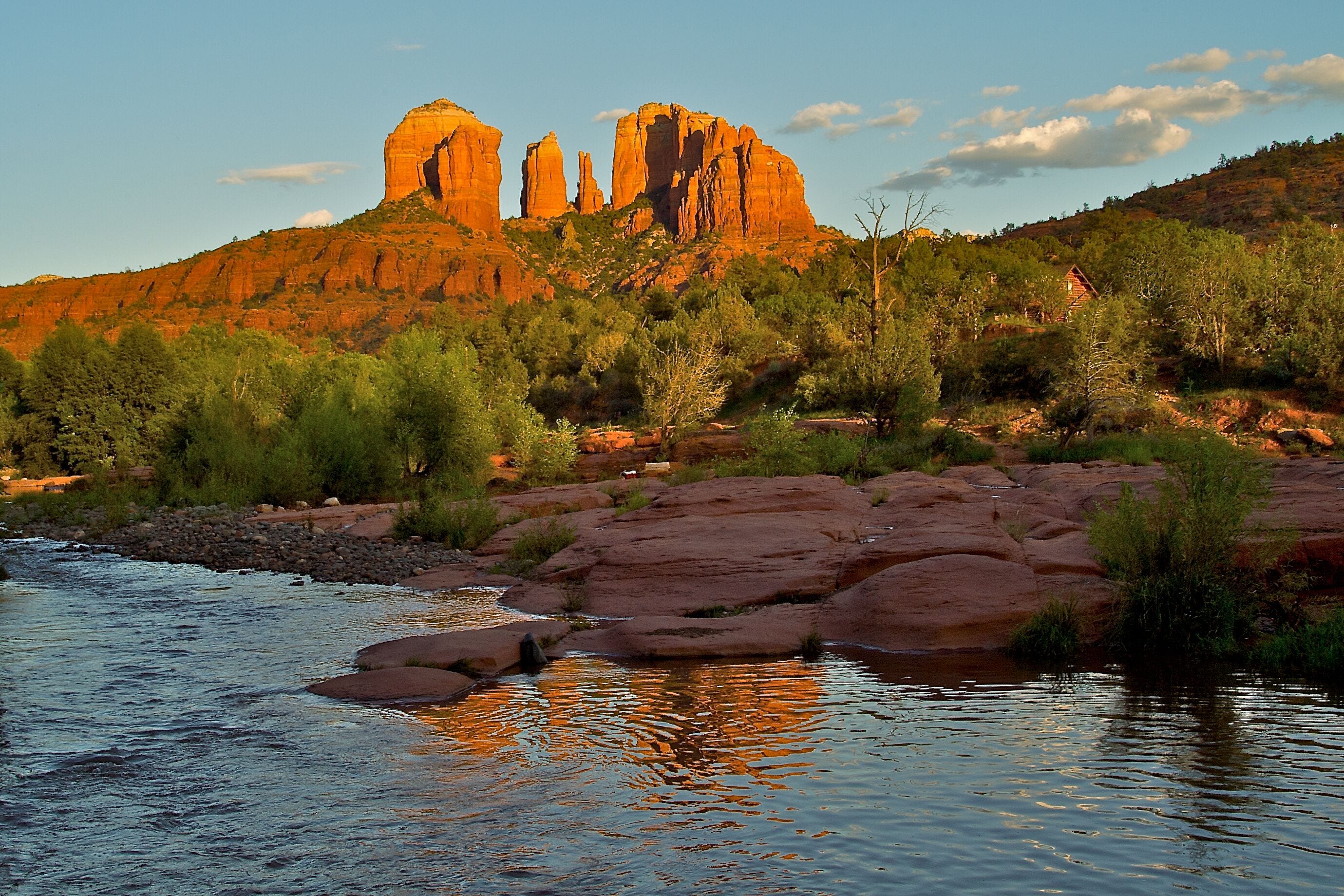
Oak Creek in Sedona
Last year, I lived in Sedona in a community built along Oak Creek. I loved that creek.
I would sit along its banks in a public area and offer prayers of gratitude for it. I experienced it as alive. Water moving through rock and trees, sustaining plants, animals, people, an entire web of life flowing through the canyon and eventually into my neighborhood.
Then I watched people take from it.
Neighbors removed rocks from the creek bed to landscape their properties rather than purchasing stone elsewhere. Trees that had grown along the creek were cut down and replaced with landscaping chosen for appearance. I remember how much it hurt to watch.
No one seemed to be asking what the creek needed. The rocks were available, so take them. The trees were inconvenient or aesthetically wrong, so replace them.
The creek became material.
I would sit beside the same water feeling something completely different. Gratitude. Reverence. Life. Something worthy of respect simply because it existed, because it sustained other lives, because it belonged to something larger than any one property line.
Recently, when I encountered the words of the Whanganui people, I understood immediately why they moved me.
I am the River and the River is me.
They named something I had felt beside Oak Creek without knowing how to articulate it.
What if the creek were never merely something running behind our homes?
What if we were the ones living beside her?
Before you take, you give
My training in energy medicine exposed me years ago to cultures and traditions that relate to Earth very differently from the world I grew up in.
I have always been moved by Andean traditions of Pachamama and by the principle of ayni, reciprocity. Ayni is often translated simply as reciprocity, but I love the larger understanding behind it.
Life moves through exchange. We receive, and we give. We are supported, and we participate. The relationship moves in both directions.
In Andean ceremonial traditions, offerings to Pachamama remain part of living practice. Flowers, food, coca leaves, seeds and other elements can become expressions of gratitude, reciprocity or acknowledgment.
Sometimes something is offered before something is taken or before the Earth is disturbed. Pause there for a moment. Before taking, give. Before disturbing, acknowledge. Before assuming something belongs to you, enter relationship with it.
Imagine how different that orientation is from much of modern life. We usually begin with what we intend to do to a place.
Build here.
Dig here.
Remove that.
Redirect this.
Own this parcel.
Move those trees.
Extract what lies beneath it.
What if sometimes the first question were simply:
May I?
Or:
What can I give in return?
Our relationship with Earth is overwhelmingly one of receiving. Every morning we wake up and the atmosphere is still here.
Water arrives.
Food grows.
Soil continues an almost incomprehensible amount of work beneath us.
Trees create shade.
Plants flower.
Rivers move.
The sun rises whether we thank it or not.
We are given so much, so continuously, that receiving begins to feel less like a gift and more like the natural order of things. Perhaps reverence interrupts that assumption.
What would gratitude look like if it became more than a feeling?
What would reciprocity look like in my own life?
Sixty seconds beneath the trees
There is a study about awe that has intrigued me for a long time.
Awe is that moment when we encounter something so vast, beautiful, or extraordinary that our usual sense of scale shifts. We are still ourselves, but for a moment we experience ourselves as part of something larger.
Researchers at UC Berkeley brought participants beneath a grove of towering eucalyptus trees. One group spent sixty seconds looking up at the trees while another stood nearby and looked at a tall building.
After the minute finished, the researchers staged what appeared to be a small accident. An experimenter approached carrying a box of pens and spilled them in front of the participants. The people who had just looked at the trees picked up significantly more pens displaying increased helpfulness. They also reported lower feelings of entitlement.
That experiment was the final part of a series of five studies led by Paul Piff, Dacher Keltner and colleagues examining awe and what the researchers called the small self. Their work suggested that experiences of awe were linked to greater generosity, helping behavior, prosocial values, and ethical decision-making.
I love what happened there. Nobody told those people to be more generous. Nobody asked them to care more about anyone else. They simply looked up. Afterward, when another person appeared to need help, they responded differently.
Another body of research on nature connectedness has found a relationship between feeling connected to nature and greater well-being. One of the measures researchers have used has an extraordinary name:
inclusion of nature in self.
Inclusion is the key element here.
Because the question underneath it is not simply:
How often do you hike?
It is:
Where do you believe you end?
I know what happens when I forget
I know what happens to me when I have gone too long without nature. It can happen even when everything in my life is good. Recently I have been consumed with building ALLTRUEistic. I love what I am creating. I feel immense gratitude for my life and for the chance to build something I believe in so completely.
But building technology also means something far less romantic.
Screens.
A desk.
Meetings.
Messages.
Decisions.
Hours indoors while I promise myself I will stand up after I finish one more thing. Over time I felt stress accumulating. I felt a little lost. I knew the feeling and recognized its source. There is a moment when my feet hit sand and something changes before I consciously decide to relax. The smell of pine can alter the entire experience of a day. Sunlight on my skin. Cold river water. Wind through trees.
My body seems to respond instantly. I have been fortunate to stand inside landscapes that made awe unavoidable.
I have stood at the edge of the Grand Canyon and tried to comprehend the time exposed in its walls.
I have climbed through the Andes to Machu Picchu.
I have traversed Mt. Whitney, driven through the otherworldly landscape of Iceland, traveled across glaciers, hiked beside waterfalls in Hawaii, and slept beneath skies filled with stars.
But some of the memories I treasure most are tiny. Picking wildflowers in California. The smell of the forest. Rain. The first steps onto a beach.
A few weeks ago, I spent three days rafting the Green River.
There were long stretches where the world seemed reduced to its original ingredients: rock, water, sky, sun, wildlife. I was detached from all my screens and my to-list. The sun moved across us all day. The river carried us through cliffs shaped on a timescale that makes a human lifetime seem almost imaginary. Animals appeared along the banks. Life organized itself around light and water and hunger and movement.
Everything in me shifted and reorganized back to balance.
I don’t want nature to be where I recover from my life
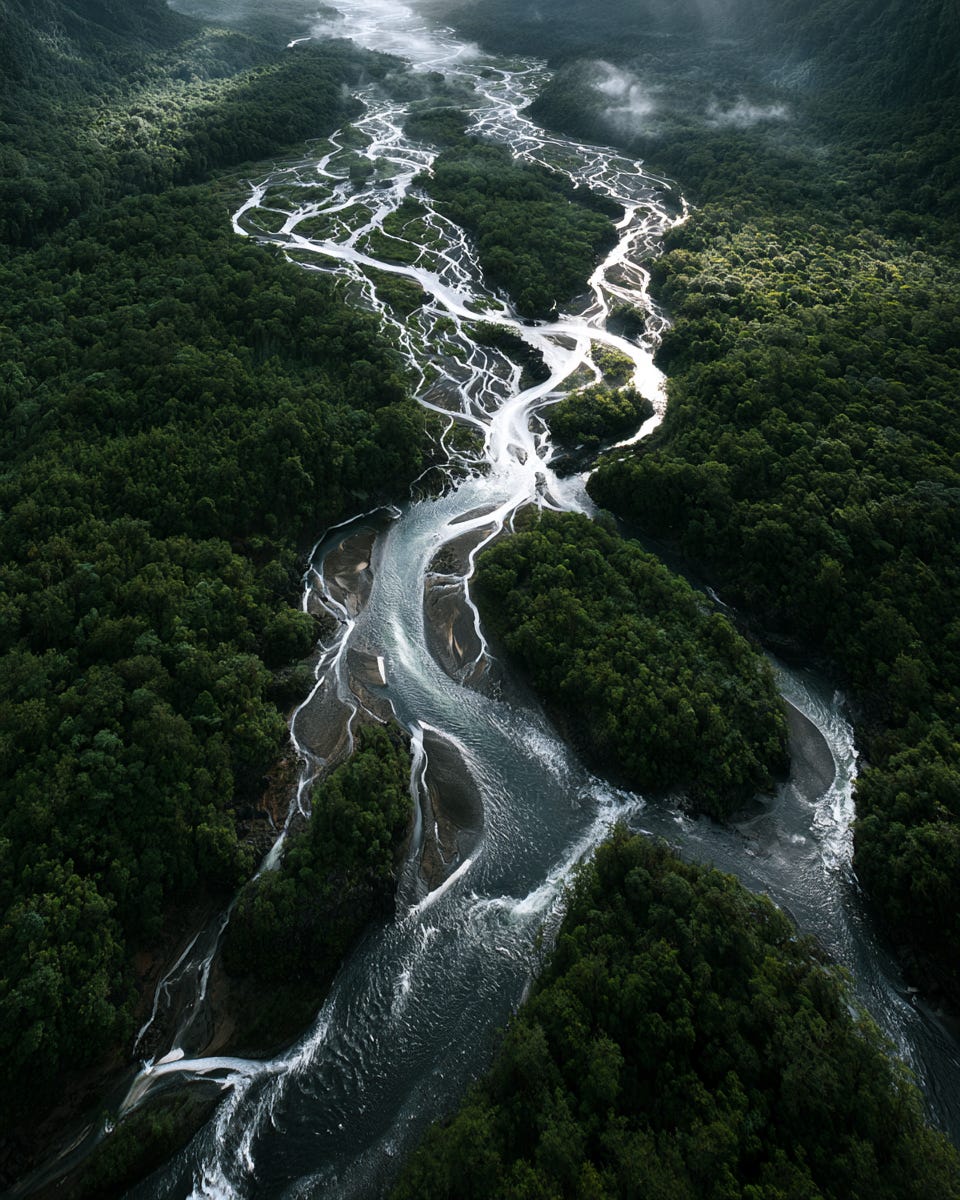
I realized nature had become the place I go to recover from the way I normally live. Instead, I want to change the way I normally live.
I recently moved to Park City, Utah, where nature refuses to remain far away. Mountains rise behind ordinary errands. Weather moves visibly through the landscape. Seasons announce themselves. Snow, trails, rivers, wildlife and enormous skies surround my daily life.
I find myself wondering what it would mean to actually allow the place to shape me.
I do not mean hiking more so I can check the box labeled nature.
I mean relationship. I want to know the land around my home .I want to know where my water comes from. I want to notice when the first leaves turn and when snow begins disappearing from the mountains. I want the natural world to enter an ordinary Tuesday instead of waiting for the weekend.
I want to organize more of my life around seasons and sunlight and weather rather than continually asking the living world to fit around the edges of my calendar. I want reverence to appear in the way I choose.
What would I change if I truly lived as though Earth were part of the relationship of my life?
Imagine a culture that remembered
What would actually change if more of us lived from that relationship?
Imagine standing on land you hoped to build on and wondering what already lives there before deciding what should be removed.
Imagine cities remembering that they still exist inside ecosystems.
Imagine throwing something “away” beginning to sound absurd because we remembered there is no away. There is only somewhere else on the same planet.
Imagine wealth carrying an instinct toward stewardship.
Imagine progress meaning that human beings flourish while the systems supporting those lives flourish too.
Imagine seeing our soil as sacred and honoring the nourishment it provides.
Imagine children growing up noticing when birds return, when flowers open, when rivers rise, when the first snow arrives.
Imagine more of us stopping occasionally because the moon is enormous.
Imagine reverence becoming ordinary.
I wonder what would happen to consumption if we loved the source of what we consumed.
I wonder what would happen to loneliness if belonging extended beyond whether another human approved of us.
I wonder what would happen to anxiety if we regularly placed ourselves in the presence of things older and larger than our immediate problems.
I wonder what would happen between us.
That question keeps bringing me back to the eucalyptus trees. The people who looked up did not leave the experiment and save a forest. They helped someone pick up pens. Perhaps relationship with the Earth expands our capacity for relationship with one another.
Perhaps awe moves something in us that does not remain contained to the thing that inspired it.
Perhaps once life becomes worthy of reverence in one place, it becomes harder to treat it carelessly somewhere else.
Reverence is a way of seeing
We often talk about environmental care through crisis.
What is disappearing. What is warming. What has been polluted. What must be stopped. Those realities matter enormously. But fear cannot be our only relationship with Earth.
I want another one too. A relationship built from wonder. Gratitude. Belonging. Awe. The simple astonishment that any of this exists.
Perhaps reverence begins before activism and before sacrifice. Perhaps it begins with seeing recognizing what is sacred and cherishing it. The ground beneath me has been holding me all along. The water moving through me belongs to a cycle larger than my lifetime. The air I call mine for a few seconds is shared with forests and oceans and animals and strangers.
I am receiving constantly.
I am participating constantly.
I belong here.
If I belong, then the question is no longer simply what I can receive from this extraordinary planet.
It becomes:
How do I want to live in relationship with it?
Perhaps nothing has to happen before we begin. We notice the ground. We take a breath. We look up. We remember what we are made of.
Then, little by little, we begin living as though the relationship is real.
We are made of this Earth.

A note from me
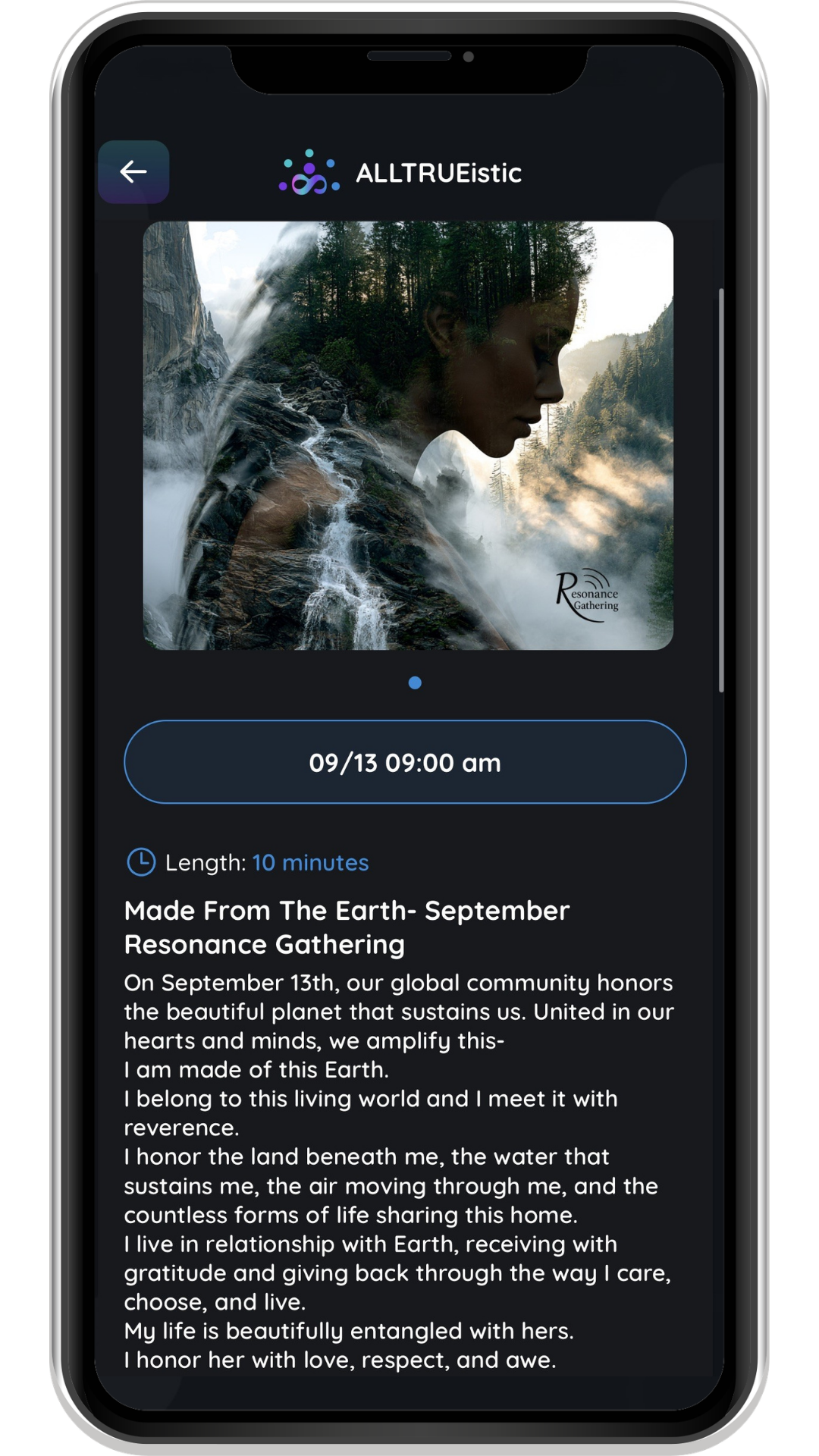
Made of This Earth is also the intention our global community will amplify together in ALLTRUEistic’s September Resonance Gathering. We gather Sunday, September 13 at 9am PST.
This month I want the experience to continue beyond the ten minutes we spend together. Throughout September, we will return to the intention, spend time reconnecting with Earth, and share what we notice internally and externally with one another by commenting inside ALLTRUEistic.
Sources & further reading
Piff, P. K., Dietze, P., Feinberg, M., Stancato, D. M., & Keltner, D. (2015). Awe, the Small Self, and Prosocial Behavior. Journal of Personality and Social Psychology, 108(6), 883–899. DOI: 10.1037/pspi0000018.
Capaldi, C. A., Dopko, R. L., & Zelenski, J. M. (2014). The Relationship Between Nature Connectedness and Happiness: A Meta-Analysis. Frontiers in Psychology, 5, 976. DOI: 10.3389/fpsyg.2014.00976.
Te Awa Tupua (Whanganui River Claims Settlement) Act 2017, New Zealand Public Act 2017 No. 7.