
Substack
Rehearsed into Reality
There was a store I drove past for years and never entered.
There was a store I drove past for years and never entered.
Brick exterior, vines draping down the front, the kind of place that looked like it belonged to a life I had not been invited into. Every time I considered walking in, the same programming started up. They will see my shoes, they will judge my purse, and they will definitely know I do not belong here. So I kept driving.
At the time, my husband and I had recently started dating. We had both come through divorce, both rebuilding, both standing at a financial starting line. One day we drove past the store and he asked if I had ever been inside. I had not and I did not tell him why. He said, let’s go in.
I watched him walk through the door and something in me understood my whole problem in an instant.
He walked in like he belonged there. No hesitation. No question of whether he could afford anything. He had known wealth much of his life. He had owned the businesses and the cars and the planes, and even though this particular moment found him rebuilding, like me, his body still carried the state. He had been wealthy, so he moved through the world as a wealthy person, regardless of the number in the account that week.
I walked in carrying lack, certain I could afford nothing. More than certain, if I am honest. My bank confirmed it, my mind looped the story of lack all day long, and I felt sure they could see it on me.
That was the day I understood what I had truly been chasing all along. A state of being.
I had transformed nearly every area of my life by then. I had healed my body when a neurologist told me my condition would only worsen with age. I had changed an unfulfilling career and an unhappy relationship. I had learned, through years of inner work, that I could shift my outer world by shifting my inner one. Yet money was the one room of the house I could not seem to enter. I kept doing the work that had transformed everything else, and in this one area, nothing moved.
Standing in that store, I finally saw why.
I wanted wealth but I still felt like someone in scarcity and the feeling was winning.
The Mind Moves Toward What It Knows
This is the powerful mechanism beneath my whole struggle and underneath most of the change people long for and cannot seem to reach.
The mind moves toward what it knows. The conscious mind can choose a new destination any morning it likes. It can set the intention, make the commitment, picture the better life. The subconscious, meanwhile, keeps navigating from an old map, and the old map wins every time, because it feels like home. You can want abundance and still feel safest in scarcity. You can want connection and still return, again and again, to the old ache of isolation. You can want healing and still hold tight to the version of yourself who needed healing in the first place.
This is why genuine change is so hard. It asks you to make a new state feel more familiar than the old one.
The real work, then, was to inhabit the state of wealth so even before there was any evidence that my senses could confirm.
How I Installed It
I started with what I was actually saying.
A teacher had taught me, years before, that I could separate myself from my own thoughts and watch them like an observer, without attachment. So I observed. I listened for what I believed about wealth, what I felt about it, the words coming out of my mouth all day. I can’t afford that. I don’t have the money for that. There was a whole running script and I had never once heard it clearly.
Underneath it I found an old belief I did not know I carried, that to be spiritual was to renounce wealth, and life had been faithfully delivering exactly that. Money would flow to me and then flow right back out. I was renouncing it without ever deciding to.
So I went looking for evidence that the belief was wrong. I found people who were both deeply spiritual and genuinely wealthy and I held them up to my subconscious like proof. See! The two can live in the same person.
Then I made something I carried everywhere.
I found an image of what wealth meant to me and on the back I wrote a description of that life as though it were already a reality. Here now. I sat with it in meditation until it was calibrated into my body, until the words and the feeling were installed deep enough that the image alone could call the whole state back. I anchored it in and embodied it. Then I put it in my pocket.
I returned to it constantly. When a thought of lack rose up, and at first that happened twenty, thirty, forty times a day, I interrupted it. Pulled out the image. Read the words. Reinstalled the state. Over and over, through every ordinary moment, the car breaking down, the bills arriving, the rent I didn’t know how I would pay, the unexpected school supplies for my children. The old fears and the worn-out programming repeating.
That is what most people leave out when they talk about this work. They imagine you decide once and wait. The truth is you interrupt the old pattern and reinstall the new one so many times that the new one finally holds. People treat the repetition as the obstacle. The repetition is the method.
This went deeper than affirming a wish. I was training my nervous system, rewiring my brain, and installing new beliefs.
In time, I stopped needing the long meditations and even the image itself. The state was mine now. The unpredictable financial obstacles no longer produced the fear. Scarcity had stopped being home and wealth had moved in. The outer number eventually rose to meet the inner state and it has stayed.
Playing a Trick on The Subconscious
There is a second piece of this story and it is the one people always gravitate to.
Early in our marriage, rebuilding, I had always wanted to travel and believed I had neither the time nor the money for it. That belief was as real to me as the scarcity in the store. So I decided to do to an experiment with tricking my subconscious.
I made a wall.
I took photographs of my family and me and placed us, through a little careful editing, in all the places I longed to go. With my daughter on a shopping spree in Paris. Taking my children to meet family in London for the first time. Exploring glaciers on a snowmobile with my son. The whole family and a few friends on a private yacht through the Greek Islands. My husband and me in Tuscany. Then I hung those invented memories on the wall in our home, scattered among the real ones, the actual birthdays and holidays and ordinary days we had already lived.
I did this for a specific reason. The subconscious treats a vividly felt image and a memory as the same material. Place an unlived future among the lived past and the brain and nervous system files it the same way. It stops being something you want and turns into something that simply belongs to you.
I walked past that wall every day and let it be ordinary. The wall asked nothing of me, just a glance in passing. That was the point. Day after day, glance after glance, the future grew familiar.
Within a remarkably short time, every one of those images happened. The shopping spree in Paris. London with the children. Iceland. The yacht through the Greek islands.
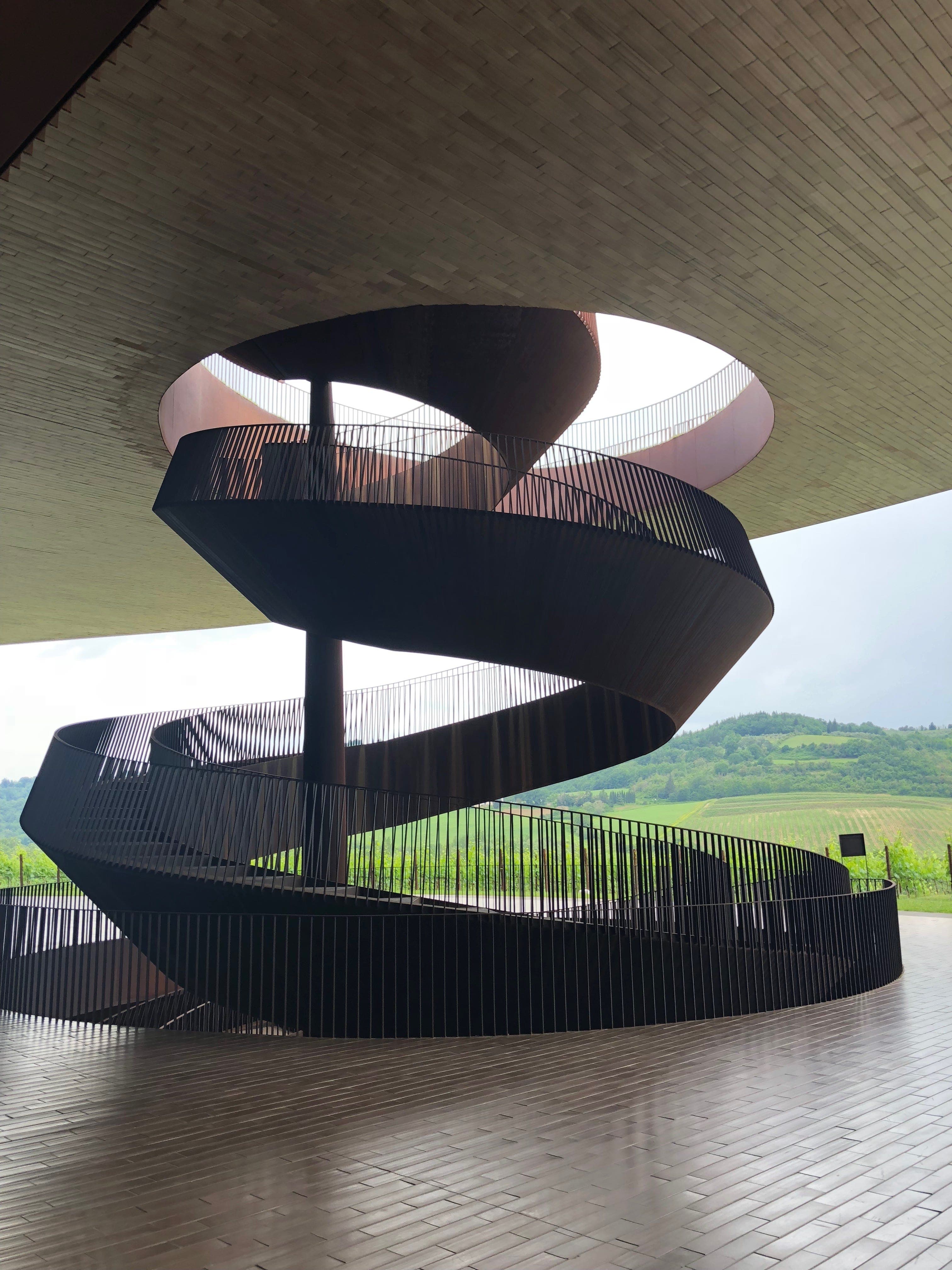
Then came the moment that even left me in awe. My husband and I were at a newly built Antinori winery in Tuscany with a beautiful spiral staircase. A woman offered to take our photo and we gratefully said yes. When I got home and looked through the pictures from the trip, I stopped on that one. It was the same staircase. The same spot, the same framing, as the image I had made and hung on the wall long before we ever booked the trip.
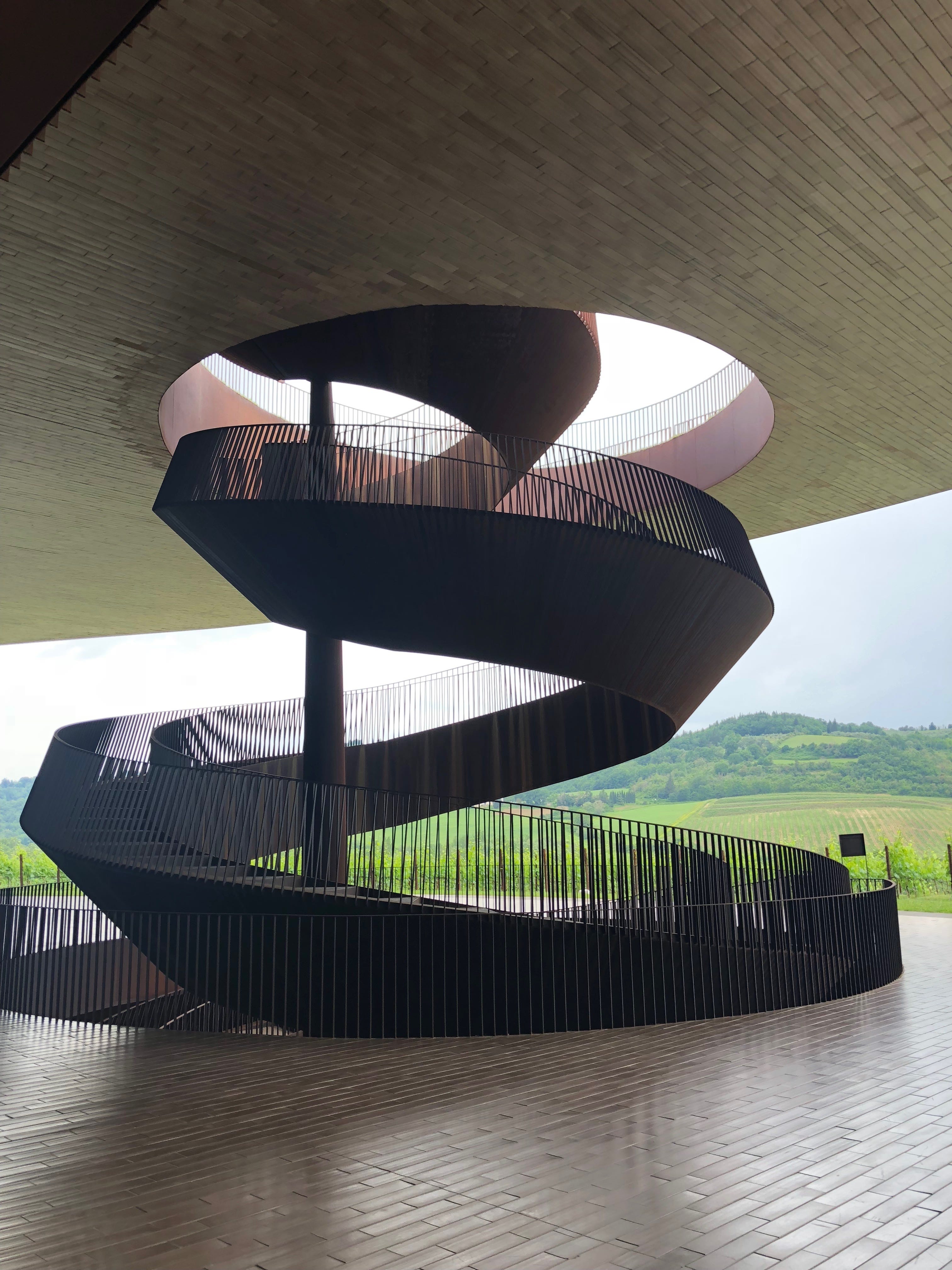
People hear that story and call it magic. I understand the instinct, though it sells the truth short. What looks like magic was familiarity doing exactly what it does. I had returned to that future so many times, even passively, even without trying, that my mind stopped treating it as foreign. The mind reaches for what it knows and by then it knew that life was already a memory.
From Altered States to Altered Traits
Most personal development focuses on elevated states.
Science is beginning to explore something far more lasting.
Elevated traits.
A state is temporary. You meditate, you feel peace, and the peace fades by the afternoon. Most of the inner-work world is built around chasing that peak, the retreat high, the breakthrough session, the moment on the cushion. Then the moment passes and ordinary life resumes, unchanged.
A trait is what remains when the state has been entered so many times that it is simply who you are. The compassion shows up in traffic. The kindness holds during the hard conversation. The wealth is in how you walk into the store. The experience is no longer something you visit, it is something you are.
Crossing from one to the other is the entire game and there is only one bridge across. Return.
For as long as human beings have paid attention to the inner life, the wise have pointed toward this same crossing. One of Buddhism’s most beloved texts opens with: mind comes first. We are shaped by what we dwell upon. What the mind returns to, again and again, gradually becomes the lens through which we meet ourselves, each other, and the world.
Centuries later, a man arrived to the same conclusion from the least likely direction. Maxwell Maltz was a plastic surgeon in the mid-twentieth century, a man whose profession was changing people on the outside. He kept noticing something that unsettled him. He would correct a feature, smooth a scar, and a portion of his patients still felt ugly afterward, still saw the old face in the mirror. Others, with no change to their appearance at all, transformed completely once something inside them shifted. The surgeon concluded that the outer change was almost beside the point. The self-image was the real territory. Reshape the face and leave the inner picture untouched and nothing changes. Reshape the inner picture and everything does. A man who altered faces for a living spent his later years teaching that the inside comes first.
William James, often called the father of American psychology, gave it a method. If you want to feel brave, he taught, act as if you are brave. If you want cheerfulness, act and speak as if cheerfulness is already there. Not as if it is coming, as if it is here.
Neville Goddard said it most plainly of all. Assume the feeling of the wish fulfilled. Live now from the inner state of the thing already done.
Again and again, teachers have returned to the same essential message: live from the end, and return to that state until it becomes the place you naturally create from
For most of history, that was wisdom without a mechanism. We knew it worked long before we knew why. Then modern neuroscience went looking for the machinery and found it.
What the Science Found
Let’s start with the discovery that the brain stays far more open to change than anyone once believed. For decades scientists assumed the adult brain was essentially fixed. We now know it reorganizes itself throughout life in response to what we repeatedly think, feel, and rehearse.
This is neuroplasticity. One of its foundational principles, as described by Donald Hebb is that when one neural pathway repeatedly helps activate another, the connection between them becomes more efficient. In simplified terms, what we repeatedly activate becomes easier to access. Over time, it stops feeling imagined and starts feeling familiar. This is how practice becomes pattern. This is how a new inner state begins to become a new way of being.
Memory turns out to be the opposite of a fixed recording. When you return to an experience, you revise it as much as you replay it. The neural networks light up and, for a brief window, soften again, open to being updated and deepened before they settle back down.
Researchers call this reconsolidation. This means return matters. Each time you re-enter a state, recall a vision, rehearse an identity, or revisit an emotional pattern, you may be strengthening and updating the network connected to it. A single experience can inspire you. A repeated one can begin to reshape what feels natural.
Then there is the work that named the whole journey. Daniel Goleman and Richard Davidson, two of the most respected figures in contemplative science, reviewed decades of research and drew the line precisely between a state and a trait. Repeated practice, they found, can convert the temporary into the lasting, with neuroplasticity as the mechanism underneath. They titled their book after the destination, Altered Traits.
There is even a measurable pattern for how this embedding works best. One of the most reliable findings in the study of memory is the spacing effect. Material returned to across separated moments roots far more durably than the same material crammed into one sitting. A landmark review of hundreds of experiments found spaced practice winning over single-session practice in the overwhelming majority of cases.
Read together, the science says something my life had already taught me. A future visited once is a beautiful experience. A future returned to across days and weeks, with feeling, is where you come to live.
Sometimes one experience is enough to shift everything, to heal what has hurt for years in a single moment. That is the most beautiful outcome there is. It happens rarely, because the old programming runs deep and the old patterns are well practiced. So for most of us, return is the road. Each return wears the new groove a little deeper, until the state you reached for is the trait you carry.
Why We Return
This is why it is important to revisit a future before it can take root.
A future imagined is only a possibility. A future rehearsed begins to be embodied. A future returned to again and again, until the nervous system recognizes it as real, settles into the body.
What lives in the body is no longer something you chase across a gap. It becomes your baseline. It becomes your identity. It becomes the self that naturally meets the future you once imagined.
That is the redefinition of this whole path. Wanting a far-off outcome badly enough was never the work. The work is to return to the inner state of the life you want so faithfully that the state stops being a visit and settles in as your nature. The self is already available to you. You return to it until it no longer feels imagined. You return to it until your body recognizes it. You return to it until you no longer have to reach for it at all.
I learned this in a store I had been afraid to enter, on a wall of places I had never been, and through a worn image I carried in my pocket and returned to forty times a day, until scarcity stopped feeling like the truth of who I was.
The future arrives because you have made it familiar.
Every return teaches your mind to recognize it, your body to trust it, and your life to make room for it. Then one day, you look up and realize you are no longer reaching for the vision.
You are living inside it.
ALLTRUEistic is a global community of open hearts gathering to change the world from the inside out. If this resonated, share it with someone who needs it.
Sources and Further Reading
Hebb, D.O. (1949). The Organization of Behavior: A Neuropsychological Theory. Wiley.
Holtmaat, A. & Svoboda, K. (2009). “Experience-dependent structural synaptic plasticity in the mammalian brain.” Nature Reviews Neuroscience.
Nader, K., Schafe, G.E., & LeDoux, J.E. (2000). “Fear Memories Require Protein Synthesis in the Amygdala for Reconsolidation After Retrieval.” Nature.
Goleman, D. & Davidson, R.J. (2017). Altered Traits: Science Reveals How Meditation Changes Your Mind, Brain, and Body. Avery.
Cepeda, N.J., Pashler, H., Vul, E., Wixted, J.T., & Rohrer, D. (2006). “Distributed Practice in Verbal Recall Tasks: A Review and Quantitative Synthesis.” Psychological Bulletin.
The Dhammapada, opening verses.
James, W. (1899). Talks to Teachers on Psychology.
Maltz, M. (1960). Psycho-Cybernetics.
Goddard, N. (1944). Feeling Is the Secret.
Goddard, N. (1952). The Power of Awareness.